ELECTRONIC DATA CAPTURE (EDC) SOFTWARE FOR CLINICAL TRIALS
EDC software for clinical trials
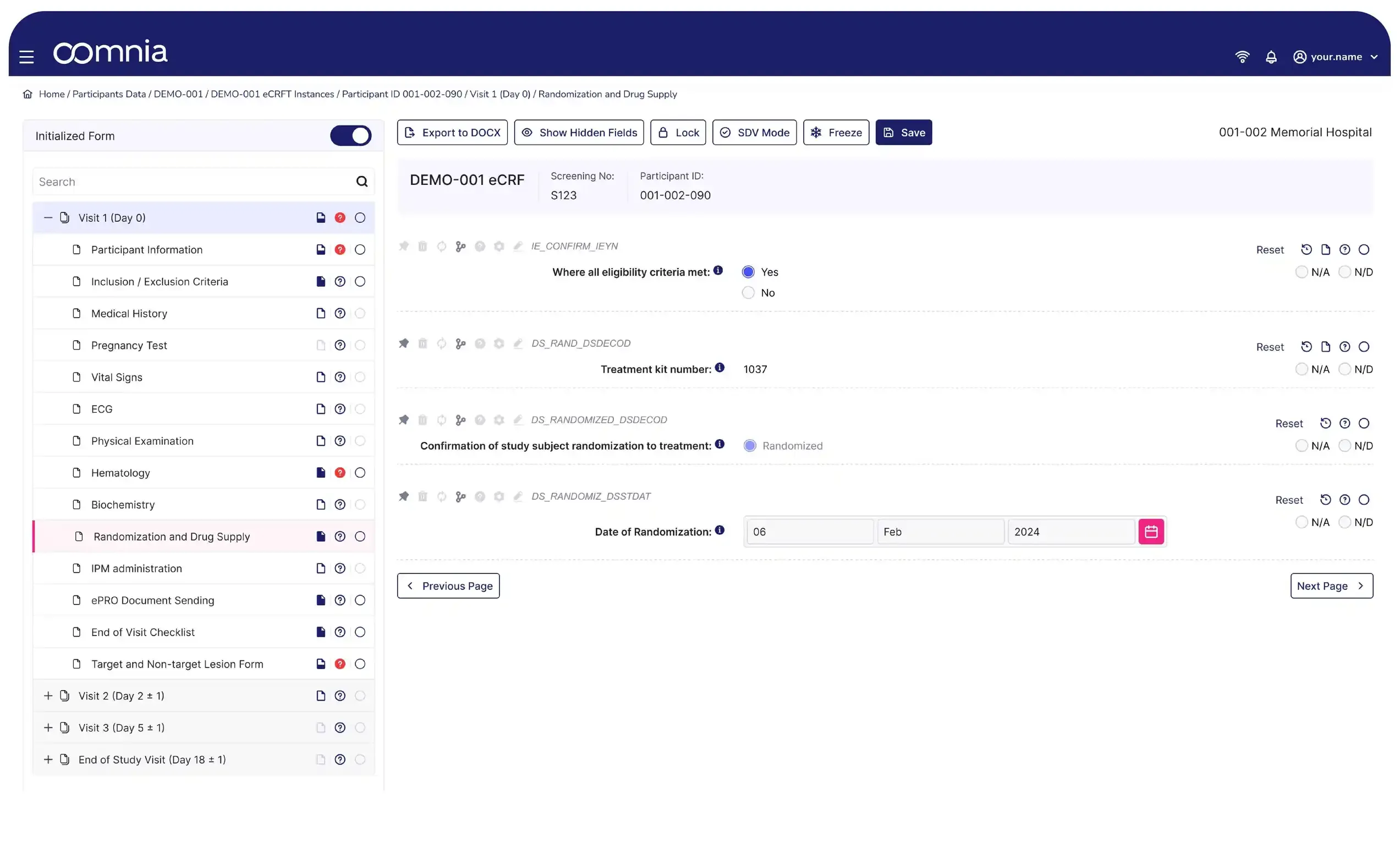
oomnia EDC is a unified Electronic Data Capture system designed for compliant, real-time clinical data collection within a fully unified clinical research information system.
Unified data capture
Wemedoo's EDC system for clinical trials enables faster, smarter, and unified data capture
CLINICAL DATA
Best EDC software for clinical trials
oomnia EDC supports regulated clinical research across multiple countries and study phases. It is designed for sponsors, CROs, and research organizations conducting regulated clinical trials across multiple countries and study phases.
oomnia EDC supports:
-
Collection of clinical trial data directly from investigational sites
-
Real-time data review and centralized monitoring
-
Standardized data structures across studies and regions
-
Inspection-ready data handling and traceability
-
Faster data cleaning and query resolution
Key Capabilities
Key capabilities of oomnia EDC
| Aspect | Modular eClinical system | Unified clinical trial software (oomnia) |
|---|---|---|
| Unified data model | Siloed exports; disconnected databases; manual sync; inconsistent terminology and study structures | Single environment with no data silos, consistent terminology, subject IDs, and study structures across all modules |
| Real‑time data availability | Delayed updates; delivery exports; limited visibility for monitoring and review | Immediate access to study data supporting real‑time monitoring, medical review, oversight, and reporting |
| Flexible study configuration | Rigid setup; requires custom development; slow to modify | Configurable eCRFs, edit checks, roles, and workflows supporting both simple and complex studies |
| Built‑in audit trails | Manual logs; incomplete tracking; difficult oversight | Automatic audit history tracking who, what, when, and why across all study operations, ensuring compliance readiness at all times |
Regulatory Readiness
Compliance and validation
oomnia EDC is designed to support regulated clinical research and aligns with established regulatory expectations, including GxP principles, 21 CFR Part 11, and ICH-GCP. The system includes role-based access control, secure authentication, electronic signatures, complete audit trails, and validation documentation support.
GxP principles
GxP-aligned processes across all clinical operations
21 CFR Part 11
Fully compatible with electronic records and signature requirements
ICH-GCP
Workflows structured in accordance with ICH-GCP standards and oversight principles
Role-based access control
Granular access management per user, site, and study
Complete audit trails
Automatic audit trails and complete data traceability across modules
Validation documentation support
Clear validation documentation and ongoing support to keep the system compliant
How It Works
How oomnia EDC works inside a clinical trial software
Unlike traditional EDC systems that operate as standalone tools, oomnia EDC is part of a unified clinical trial data management platform. This means:
No separate systems for CTMS, eTMF, or eConsent
No duplicate data
Shared data model
One audit trail across modules
Fewer reconciliation points
Consistent data definitions across study functions
Real-time operational oversight
Unified EDC system vs traditional EDC architecture
Integration layers cannot fix structural fragmentation. They only add complexity. Only a unified EDC eliminates fragmentation at its core, enabling real-time visibility, centralized oversight, and consistent compliance across the entire study lifecycle.
| Aspect | Traditional EDC architecture | Unified oomnia EDC software |
|---|---|---|
| System structure | Standalone EDC connected to separate CTMS, eTMF, and RTSM systems | EDC operates within a single shared clinical research architecture |
| Data model | Separate databases with mapped integrations | One shared data model across all modules |
| Data reconciliation | Manual reconciliation between systems | No cross-system reconciliation required |
| Audit trails | Multiple audit layers across different systems | One unified audit trail across all study functions |
| Data availability | Batch transfers and delayed synchronization | Real-time data access across operational and clinical workflows |
| Study configuration | Changes may require cross-system updates | Protocol changes propagate within one controlled environment |
| Reporting | Data aggregation required from multiple sources | Centralized reporting from one structured dataset |
| Inspection readiness | Documentation and data stored in separate systems | Clinical data and documentation linked within one compliance framework |
Who This Is For
Who oomnia EDC is for
oomnia EDC is designed for:
Sponsors managing multi-study portfolios
CROs running complex, global clinical trials
Research organizations transitioning from fragmented clinical systems
Teams seeking operational efficiency without compromising compliance
The Platform
All clinical trial tools unified in one clinical trial platform
CTMS software
Automated trial management solution designed to streamline study oversight
ETMFeTMF software
Digital workspace for storing, managing, and accessing trial master file documents
ECONSENTeConsent software
Electronic informed consent solution designed for seamless participant consent capture
EPROePRO software
Real-time electronic patient-reported outcomes solution for patient data entry
ECOAeCOA software
Capture patient-reported outcomes, clinician assessments, and study data in real time without paper workflows
RTSMRTSM software
Randomization and Trial Supply Management system that automates treatment allocation and blinding in real-time
ESOURCEeSource clinical trials
Electronic source system that captures original site data in real time, fully validated and without manual transcription
Get Started
Ready to unify your clinical data environment?
Eliminate fragmented systems, reduce reconciliation, and gain real-time oversight across your clinical trials.
Talk to our teamResources
EDC resources
EDC
Wemedoo returns to Xraised episode 2 with unified data in focus
July 9, 2026
Making oncology data work: Wemedoo’s latest scientific contribution!
June 24, 2026
Artificial Intelligence in Clinical Trials: Balancing Innovation and Accuracy
June 24, 2026
A new scientific publication featuring Wemedoo researchers has been published in BMC Medical Research Methodology
June 24, 2026
Interview with Dr. Nikola Čihorić: The Role of Common Data Elements in Breast Cancer Care
June 24, 2026
Interoperability: The Missing Piece in Clinical Trial Efficiency
June 24, 2026
Mastering Protocol Deviation Management: The Smart Way Forward With ePDL
June 24, 2026
The CRO’s Guide to Winning Sponsor Trust
June 24, 2026
Key Takeaways from EUCROF25: AI, Integration, and CRO Challenges in Clinical Trials
June 24, 2026
Wemedoo Talks: Insights from Industry Leaders
June 24, 2026
Wemedoo Becomes an Associate Member of EUCROF
June 24, 2026
Across Global Alliance Selects oomnia as a Central Trial Infrastructure
June 24, 2026
Revolutionizing Clinical Trials: How Wemedoo is Accelerating Global Research
June 24, 2026
Why does unified data matter? Hear from Wemedoo at Swiss Biotech Day!
June 24, 2026
Wemedoo in The CEO Magazine: Fixing Clinical Trials
June 24, 2026
Wemedoo in Forbes: From Clinical Frustration to Real Innovation
June 24, 2026
New Era of Clinical Trials with oomnia®: Built for Complexity, Designed for Simplicity
June 24, 2026
Reducing costs and standing out as a CRO
June 24, 2026
Dr. Nikola Cihoric elected to EUCROF AI Expert Group
June 24, 2026
Wemedoo announces strategic partnership with mediri to streamline imaging data management in clinical trials
June 24, 2026
Wemedoo’s innovation journey with oomnia on Xraised
June 24, 2026
Accessing better technology for clinical trials
June 24, 2026
The hidden cost of disconnected systems in biotech and the path to streamlined trials
June 24, 2026
Wemedoo receives SCDM innovator start-up of the year 2025 award
June 24, 2026
From device to database in 2 weeks made possible by Wemedoo and Withings
June 24, 2026
Wemedoo featured on BioSpace
June 24, 2026
Wemedoo joins Xraised again to share new perspectives
June 24, 2026
Wemedoo featured on AP News
June 24, 2026
Clinical trial trends in 2025
June 24, 2026
Why eClinical architectures have reached their limits, and a new category is emerging
June 24, 2026
Handling complex data in oncology trials
June 24, 2026
Fast database lock in a complex Phase III diabetes study
June 24, 2026
Why compliance risk increases in modular eClinical setups
June 24, 2026
The system architecture behind the data reconciliation challenge in clinical trials
June 24, 2026
What makes a clinical trial software truly unified
June 24, 2026
Solving MedTech trial complexity with the right technology partner
June 24, 2026
Top EDC software solutions for clinical trial teams
June 24, 2026
Frequently asked questions
What is EDC software in clinical trials?
An electronic data capture system is software used in clinical trials to collect, manage, and store study data in digital form. It replaces paper-based data collection and supports regulatory compliance, audit trails, and centralized monitoring.
How is unified EDC different from traditional EDC?
Traditional EDC systems operate independently from CTMS and eTMF tools, requiring manual data reconciliation. A unified EDC operates within a single system where all study data shares the same structure and environment.
What are the benefits of oomnia EDC software?
A unified EDC system in clinical trials centralizes data capture and study management within a single unified clinical trial software, instead of relying on multiple disconnected systems.
The main benefit is improved efficiency and data consistency. When EDC, CTMS, eTMF, RTSM, or eSource are connected in one environment, there is no need for manual data transfers or complex integrations, reducing errors and discrepancies.
How does oomnia EDC compare to other EDC systems?
Unlike standalone EDC systems that require separate integrations, oomnia EDC is natively unified with CTMS, eTMF, RTSM, ePRO, and eConsent. This eliminates data reconciliation, reduces study setup time, and provides a single source of truth for all clinical trial data.
How does EDC improve data quality?
An electronic data capture (EDC) system improves data quality in clinical trials by reducing manual errors and enforcing structured data entry. Built-in edit checks, validation rules, and automated queries help detect inconsistencies or missing data in real time.
EDC also provides centralized oversight, audit trails, and role-based access control, ensuring that data is accurate, traceable, and compliant with regulatory requirements.
Is oomnia EDC software compliant with 21 CFR Part 11?
Yes, oomnia EDC software is fully compliant with 21 CFR Part 11, HIPAA, GDPR, and ICH GCP requirements. It includes complete audit trails, electronic signatures, role-based access control, and data encryption to ensure regulatory readiness at all times.
How fast can a study be set up using oomnia EDC?
oomnia EDC enables faster study setup through its drag-and-drop eCRF form designer, reusable templates, and automated validation rules. Studies can be configured and validated significantly faster compared to traditional EDC systems, reducing time-to-first-patient.